



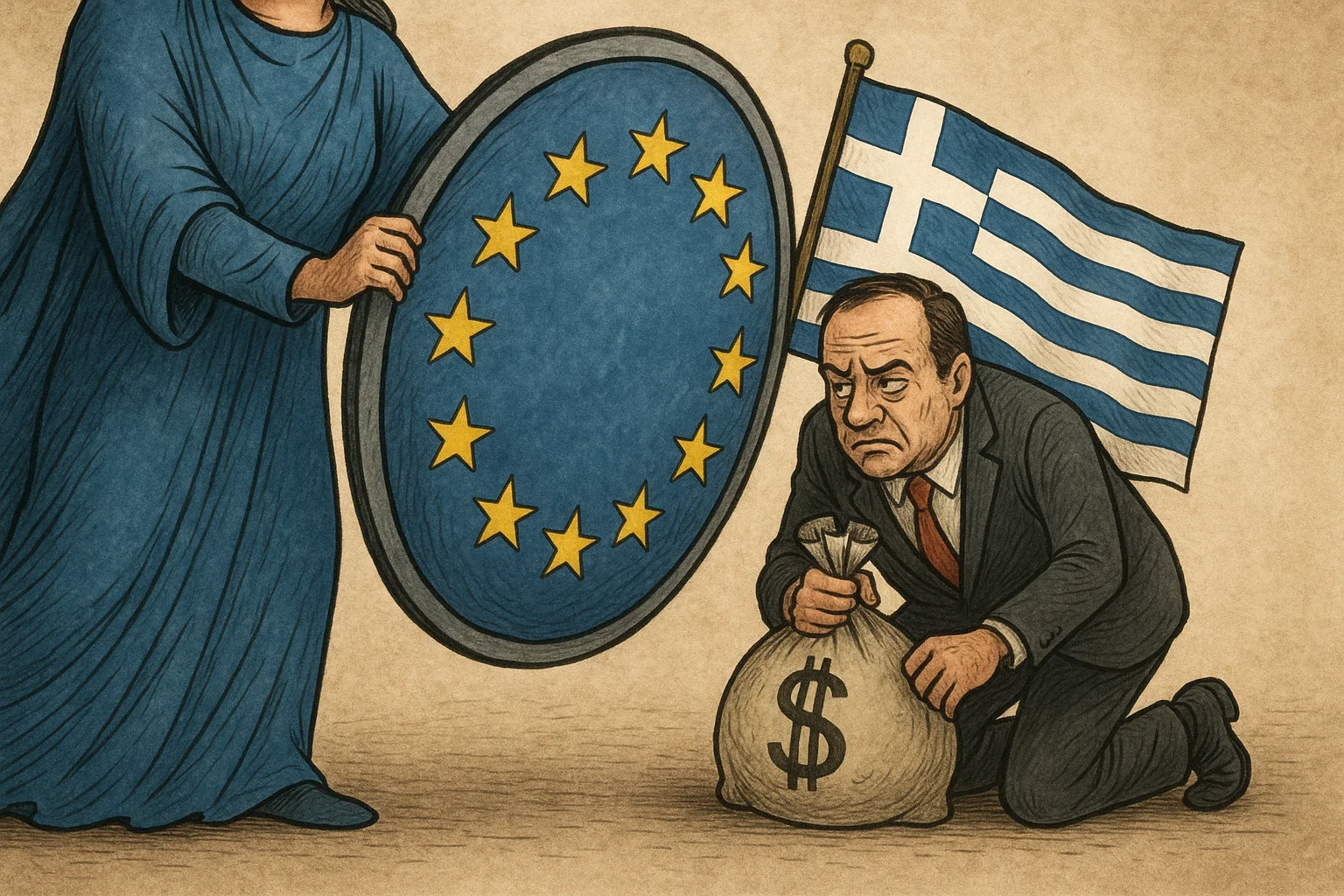
The European Union frequently presents itself as a community governed by law, fiscal responsibility, and institutional accountability. These principles are not merely abstract ideals, they are supposed to be the foundations upon which shared budgets, common debt instruments, cohesion funds, and taxpayer trust ultimately rest. Yet the credibility of this architecture collapses when legal immunity and political expediency are tolerated at the national level, particularly when European institutions are fully aware of the problem and choose inaction.
In Greece, a long-standing constitutional provision (known as Article 86) has created a parallel legal reality for political actors. While ordinary citizens and private-sector executives remain fully exposed to criminal investigation and prosecution, senior Greek politicians benefit from procedural barriers that make meaningful accountability practically impossible. Investigations into serious criminal offences cannot even begin without parliamentary consent, a consent that is systematically withheld whenever political cost is involved. This is no longer a simple legal safeguard, it resembles a mechanism of self-exoneration. A get-out-of-jail card in Monopoly.
From a financial perspective, the implications are profound. The European Union is not just a political union, it is a fiscal one first and foremost. European funds flow into member states through structural programmes, recovery instruments, and sector-specific investments, often reaching billions of euros per country. When those responsible for allocating, supervising, or mismanaging these funds are shielded from prosecution by domestic constitutional arrangements, the integrity of the EU’s entire financial governance framework is compromised.
The European Public Prosecutor’s Office (EPPO) was established precisely to address this risk: to protect the Union’s financial interests where national systems fail. Its mandate is explicit. Yet when confronted with domestic legal structures that neutralise accountability for political figures, the EPPO has so far deferred rather than intervened. This reluctance sends a damaging signal, not only to citizens, but to markets and institutions that depend on predictable enforcement of rules.
The doctrine of the supremacy of EU law exists to prevent exactly this scenario. National provisions cannot override Union law where fundamental principles such as equality before the law, effective judicial protection, and the safeguarding of EU funds are at stake. When European institutions decline to assert this principle, they are not acting neutrally; they are actively permitting legal asymmetry within the Union.
Countries Benefiting the Most from EU Funding
- Poland
- Spain
- Italy
- Greece
- Romania
- Hungary
- Luxemburg
- Croatia
- Estonia
- Latvia
This asymmetry carries a financial cost. Investors, credit agencies, and supranational lenders assess governance risk alongside macroeconomic indicators. A state where political actors are effectively immune from prosecution is not merely a moral outlier, it is a structural risk. Corruption, misallocation of funds, regulatory capture, and safety failures are not hypothetical outcomes; they are empirically linked to weak accountability frameworks.
Recent tragedies tied to infrastructure and regulatory oversight underscore this reality. European bodies tasked with supervision and enforcement had knowledge of systemic non-compliance with Union standards. Yet enforcement was deferred, warnings were diluted, and decisive action was avoided. The result was not just institutional embarrassment, but irreversible human loss, an outcome that no amount of post-hoc statements about values can undo.
Financial Mismanagement: Tempi Rail Disaster

The Tempi rail disaster, one of the deadliest transport accidents in modern Greek history, occurred in February 2023 when two trains collided head-on in central Greece, claiming dozens of lives, most of them young people. In the immediate aftermath, public discourse focused on human error and operational failure. Yet as investigations unfolded, it became increasingly clear that the accident could not be explained by a single mistake or an isolated breakdown. Instead, Tempi emerged as the endpoint of a long process marked by delayed modernisation, incomplete safety systems, and chronic underinvestment masked by formal compliance, much of it tied to the mismanagement of European and national funds intended to bring Greece’s rail infrastructure in line with EU safety standards.
The tragedy in Tempi must be understood not as an isolated accident, but as the most devastating manifestation of prolonged institutional and financial failure. For years, substantial European funds were allocated to modernise Greece’s rail infrastructure, improve signalling systems, and align safety standards with EU requirements. Yet critical projects remained incomplete, delayed, or functionally inoperative, despite formal compliance on paper.
This disconnect between funding and execution points to systemic mismanagement rather than technical error. When oversight mechanisms fail and those politically responsible for allocating and supervising public and European funds are shielded from meaningful accountability, safety becomes secondary to administrative convenience.
Tempi was the human cost of this distortion. A moment where abstract failures in governance, procurement, and enforcement translated into irreversible loss of life. The tragedy exposes the direct link between financial mismanagement, institutional immunity, and the erosion of the rule of law. All pointing to the fact that that fiscal negligence within protected political structures is not merely a budgetary issue, but a matter of life and death.
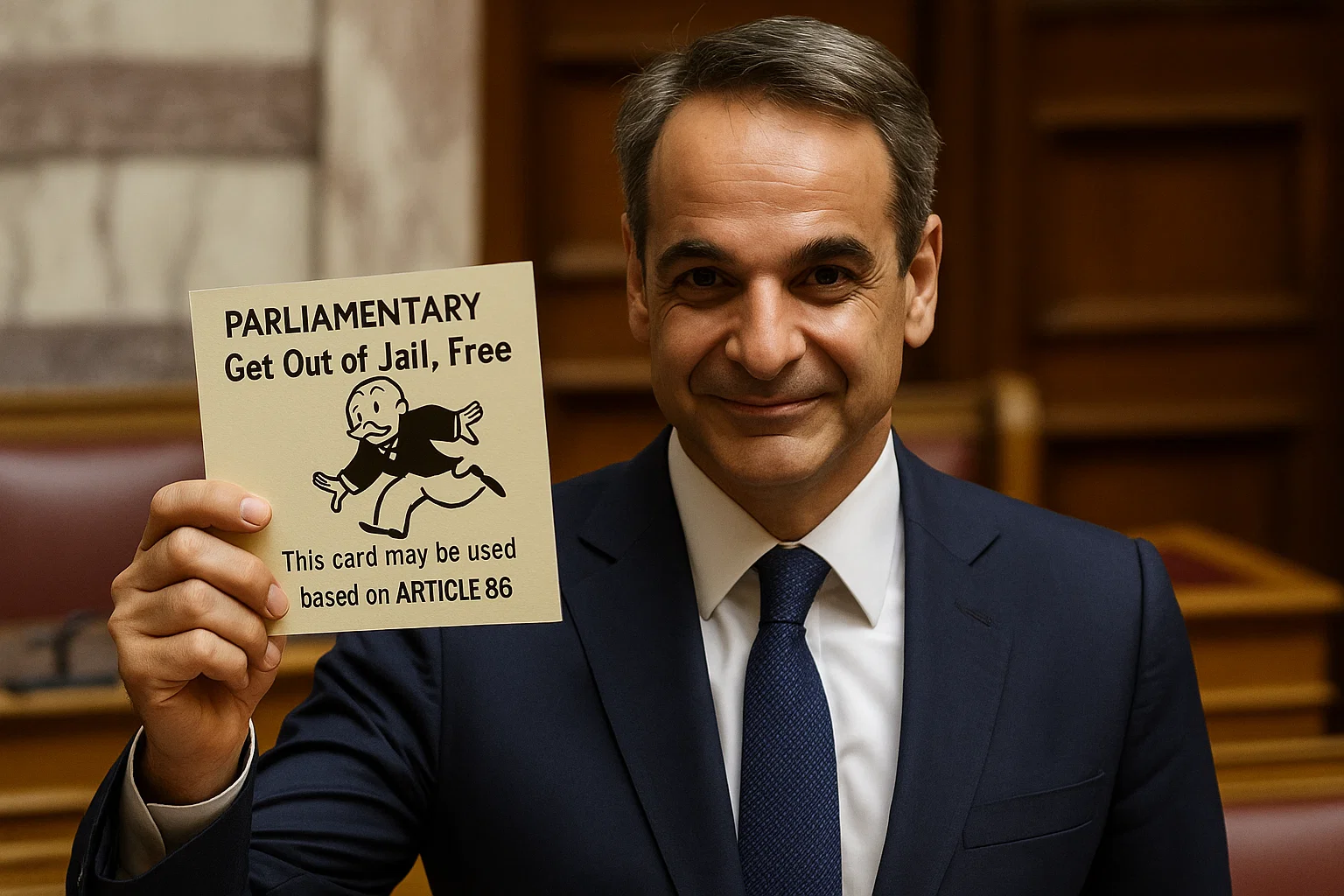
The contradiction is stark. On paper, the European Union insists on rule-of-law conditionality for funding. In practice, when violations implicate political elites within member states, enforcement becomes selective. This dual standard erodes public trust and undermines the legitimacy of European fiscal solidarity. Citizens are asked to underwrite common debt and contribute to shared budgets while watching political actors evade responsibility for the misuse of those very resources.
Accepting the application of EU legal supremacy in such cases would mark a decisive break with decades of tolerated impunity. It would also strengthen, rather than weaken, democratic governance. Political accountability does not deter capable leadership, it deters misconduct. Future officeholders, aware that immunity no longer exists in practice, would be incentivised to act with diligence rather than complacency.
Countries with the Most Unfair Political Immunity Laws
- Brazil
- Turkey
- India
- Greece
- Spain
- Kyrgyzstan
- Albania
- Honduras
- Moldova
- Portugal
- Italy
- Peru
- Armenia
- Belgium
- Mexico
The European Union now faces a defining choice. It can continue to invoke the language of the rule of law while allowing domestic legal loopholes to neutralise it. Or it can affirm that financial integration without legal equality is unsustainable. For a Union built on shared liability and collective trust, the latter is not merely preferable, it is necessary.
If Europe wishes to remain credible as a financial and legal entity, it must demonstrate that no office, no mandate, and no parliamentary majority stands above the law.
* Article images were generated by AI
Author Profile

- Lucy Walker covers finance, health and beauty since 2014. She has been writing for various online publications.
Latest entries
- June 4, 2026Global EconomicsEconomics and Reliability of Agentic AI in Enterprise Use
- December 20, 2025NewsWireWhat Reuters Meta Scam Leak Says About the World’s Largest Social Network
- December 14, 2025Global EconomicsHow Parliamentary Immunity Undermines Europe’s Financial Union
- June 30, 2025NewsWireBank Savings at Risk: The Dark Side of EU’s Savings Standard